The DigiFarm project aims to enhance the digital skills of agricultural advisors in Europe, with an emphasis on the use of digital tools, data, and smart and precision farming technologies. Through an innovative and flexible training programme, the project supports advisors in providing more effective, sustainable, and tailored advisory services to farmers. DigiFarm contributes to the sustainable transition of the agricultural sector by strengthening the digital, environmental, and business skills of professionals in the field.
The project will deliver tailored training content and open e-learning modules adapted to the needs of agricultural advisors. By developing competences across digital, environmental, business, and social domains, DigiFarm supports the digital and green transition of agriculture. Its impact will be evaluated through qualitative and quantitative indicators, as well as feedback from trainees and trainers, ultimately enhancing advisors’ capacity to provide more effective, sustainable, and innovative advisory services across Europe.
Call: Erasmus+ KA220-VET – Cooperation Partnerships in Vocational Education and Training (GA ID:: 2025-1-CY01-KA220-VET-000363436)
Total Grant: 250,000 €
Project Duration: 01/09/2025- 31/08/2027
Coordinator: ERATOSTHENES Centre of Excellence -Cyprus
Consortium Partners:

September 2025 | Limassol, Cyprus
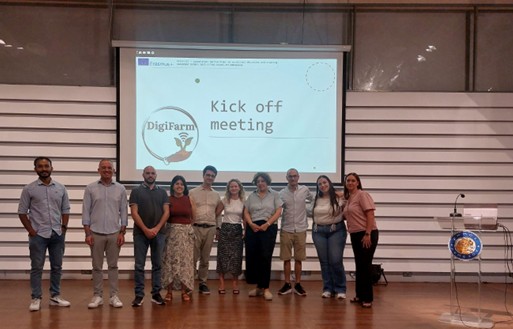
The DigiFarm project officially launched with a consortium kick-off meeting hosted by the ERATOSTHENES Centre of Excellence. Partners aligned on project objectives, roles, and the overall implementation roadmap, setting the foundation for the effective collaboration onwards.
28 April 2026 | Paphos, Cyprus
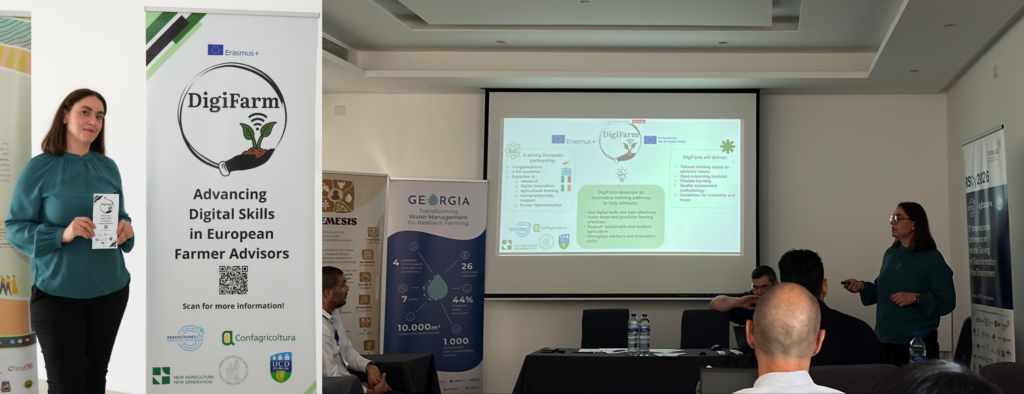
The DigiFarm project was presented at the 12th International Conference on Remote Sensing and Geoinformation of Environment (RSCY2026) during the session “Living Labs and Digital Innovation for Sustainable Agriculture”. The presentation, delivered by Dr. Maria Prantsidou from ERATOSTHENES Centre of Excellence, introduced the project’s objectives and approach to strengthening the digital competencies of agricultural advisors through vocational education and training to a wide audience of researchers, policymakers, industry representatives, and agricultural stakeholders. It also presented the results of the training needs assessment, highlighting key skill gaps, training priorities, and barriers to the adoption of digital technologies in agricultural advisory services. The findings provided valuable insights for the development of the DigiIFarm training programme, supporting its aim to strengthen the digital transformation of the agricultural sector.
22–24 April 2026 | Den Bosch, Netherlands
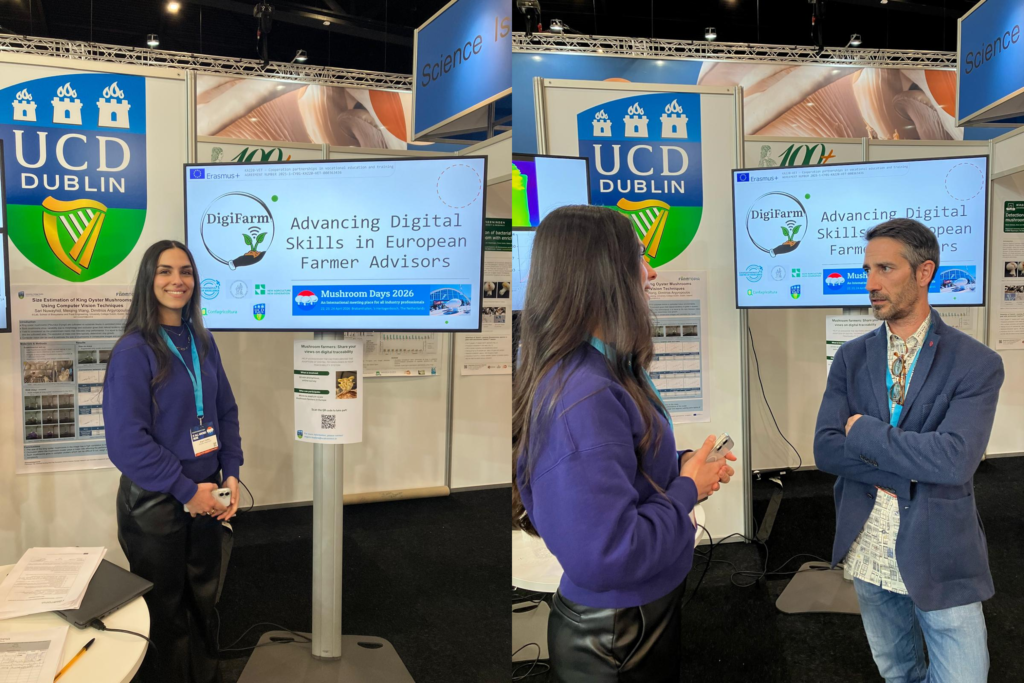
The DigiFarm project was presented by University College Dublin at Mushroom Days 2026, the largest international trade fair dedicated to the mushroom industry. The event brought together mushroom producers, advisors, researchers, industry representatives, and other stakeholders from across the agrifood sector.
The presentation introduced the project’s objectives and its approach to strengthening the digital competencies of agricultural advisors through vocational education and training. It also provided an opportunity to engage with stakeholders on the importance of digital skills, smart farming technologies, and innovation in advisory services for supporting more sustainable and data-driven agricultural practices. The event contributed to increasing the visibility of DigiFarm and promoting its role in supporting the digital transformation of European agriculture.
Project Coordinator: ERATOSTHENES Centre of Excellence
Assoc. Prof. Menelaos Stavrinides
menelaos.stavrinides@eratosthenes.org.cy
Project Manager: Dr. Maria Prantsidou
maria.prantsidou@eratosthenes.org.cy

This project is funded by the Erasmus+ Programme of the European Union (GA ID:: 2025-1-CY01-KA220-VET-000363436). The views and opinions expressed are those of the authors only and do not necessarily reflect those of the European Union or the European Commission. Neither the European Union nor the National Agency can be held responsible for any use that may be made of the information contained herein.

Participation in programmes subsidised by the Human Resource Development Authority of Cyprus is subject to the following: