
Documenting Cyprus’ “Lagoumia” – MED H2 Project (Interreg Euro-MED)
Over the past week (Monday 14 – Friday 18 September), our cultural heritage team from the Eratosthenes Centre of Excellence, comprised of Dr Konstantinos Roussos, Dr Mahmoud Mardini, and Mr Andreas Livadiotis, carried out the first round of fieldwork for the MED H2 project (Interreg Euro-MED), led by the Cyprus Chamber of Commerce and Industry (CCCI), documenting the intangible hydraulic heritage of Akaki and Fikardou, Cyprus.
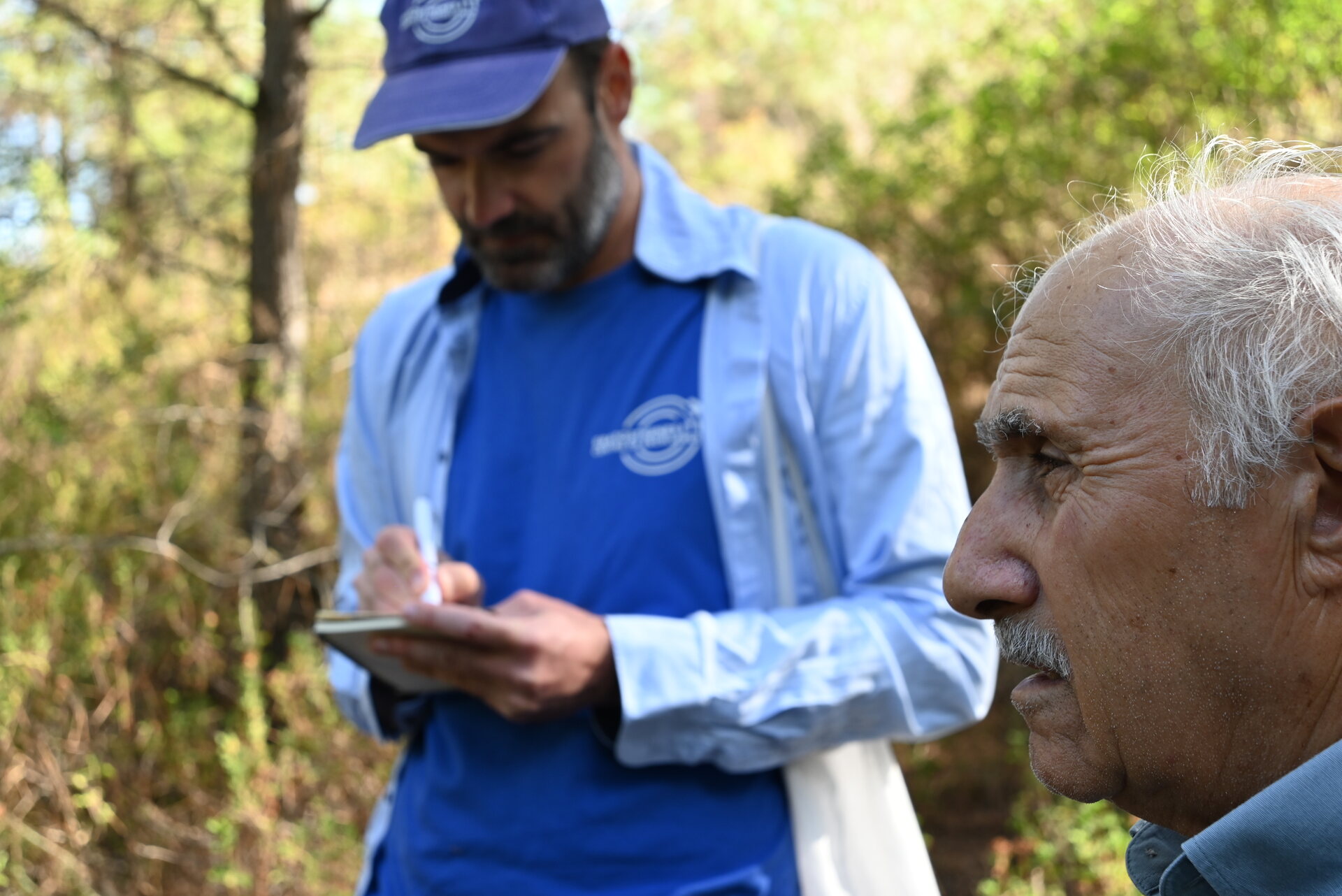
“Lagoumia” are the underground water tunnel networks that once supplied these villages. This first week of fieldwork combined on-the-ground documentation of the lagoumia combined with an ethno-historical component within the project’s activities which necessitatedinterviewing local residents who worked with the water structures in the past, to record how they were built, maintained, and shared within the community.
Three days in Akaki were spent with three locals who took us extensively around the village and its surroundings to the lagoumia: Mr Georgeos Manoloudis (Day 1), Mr Kostas Tofitziki (Day 2), and Mr Michalis Tofitziki (Day 3). We also spoke with Mr Panayis Themistocleous, gathering oral histories on traditional water practices, customs, and place-names tied to water in the area. A fourth day took us to Fikardou, where Mr Christos Tirimos, the community leader, and Mr Dimitris Dimitriou showed us their village’s own historical lagoumia and helped us document the process there.
The tradition of building and maintaining lagoumia stopped decades ago, but the knowledge behind it is still held by the people who worked these systems in their youth. Recording it now, while it remains part of living memory, is a central part of this documentation.
None of this would have been possible without the support of the Municipality of Akaki and the Community of Fikardou, particularly Mrs Eleni Georgopoulou (Akaki) and Mr Christos Tirimos (Fikardou), who welcomed us with full support throughout
Την περασμένη εβδομάδα (Δευτέρα 14 – Παρασκευή 18 Σεπτεμβρίου), η ομάδα πολιτιστικής κληρονομιάς του Κέντρου Αριστείας ΕΡΑΤΟΣΘΕΝΗΣ, αποτελούμενη από τον Δρ Κωνσταντίνο Ρούσσο, τον ΔρMahmoud Mardini και τον κ. Ανδρέα Λιβαδιώτη, πραγματοποίησε τον πρώτο κύκλο επιτόπιας έρευνας στο πλαίσιο της συμμετοχής του Κυπριακού Εμπορικού και Βιομηχανικού Επιμελητηρίου (ΚΕΒΕ) στο έργο MED H2 (Interreg Euro-MED), με στόχο την τεκμηρίωση της άυλης υδραυλικής κληρονομιάς του Ακακίου και του Φικάρδου.
Τα «λαγούμια» είναι τα υπόγεια δίκτυα σηράγγων μεταφοράς νερού που κάποτε υδροδοτούσαν τα χωριά αυτά. Η πρώτη εβδομάδα επιτόπιας έρευνας συνδύασε την επί τόπου τεκμηρίωση των λαγουμιών με την εθνοϊστορική συνιστώσα του έργου, η οποία περιλάμβανε συνεντεύξεις με κατοίκους που δούλεψαν στο παρελθόν σε αυτά τα υδραυλικά έργα, ώστε να καταγραφεί πώς κατασκευάζονταν, πώς συντηρούνταν και πώς γινόταν η μοιρασιά του νερού μέσα στην κοινότητα.
Τρεις ημέρες στο Ακάκι πέρασαν με τρεις ντόπιους, οι οποίοι μας ξενάγησαν εκτενώς στο χωριό και στην ευρύτερη περιοχή, στα σημεία όπου βρίσκονται τα λαγούμια: τον κ. Γεώργιο Μανωλούδη (1η ημέρα), τον κ. Κώστα Τοφιτζίκη (2η ημέρα) και τον κ. Μιχάλη Τοφιτζίκη (3η ημέρα). Συνομιλήσαμε επίσης με τον κ. Παναγή Θεμιστοκλέους, καταγράφοντας προφορικές μαρτυρίες για τις παραδοσιακές πρακτικές, τα έθιμα και τα τοπωνύμια που σχετίζονται με το νερό στην περιοχή. Την τέταρτη ημέρα βρεθήκαμε στο Φικάρδου, όπου ο Κοινοτάρχης, κ. Χρίστος Τυρίμος, και ο κ. Δημήτρης Δημητρίου μάς έδειξαν τα ιστορικά λαγούμια του χωριού τους και μας βοήθησαν στη διαδικασία τεκμηρίωσης.
Η παράδοση της κατασκευής και συντήρησης των λαγουμιών σταμάτησε πριν από δεκαετίες, όμως η γνώση που τη συνόδευε εξακολουθεί να υπάρχει στους ανθρώπους που δούλεψαν σε αυτά τα συστήματα στα νιάτα τους. Η καταγραφή της τώρα, όσο αποτελεί ακόμη μέρος της ζωντανής μνήμης, βρίσκεται στον πυρήνα αυτής της τεκμηρίωσης.
Τίποτα από αυτά δεν θα ήταν δυνατό χωρίς τη στήριξη της Κοινότητας Ακακίου και της Κοινότητας Φικάρδου, και ιδιαίτερα της κας Ελένης Γεωργοπούλου (Ακάκι) και του κ. Χρίστου Τυρίμου (Φικάρδου), που μας υποδέχθηκαν με πλήρη στήριξη καθ’ όλη τη διάρκεια.

